Philosophy is generally defined as the love of wisdom. It looks like an abstract way of describing the project of a discipline which had its roots in the pre-Socratics. In this article, my project is to give a description of what philosophy is. I will be deriving insights from both the Indian and Western traditions of thinking.
Aristotle begins his famous work Metaphysics with this following sentence:
“All men by nature desire to know.”
It means that the desire for knowledge is fundamental to human existence. This is what distinguishes human beings from the rest of the creation. We human beings try to know the world, not in a superficial way, but in a deeper way and try to arrange the world in more meaningful ways. Technology is the way we modify the world in order to make our lives better and meaningful. Aristotle can be considered as the thinker who established all the disciplines that we find in our university departments. Whatever you want to study, Aristotle had written a book on it. Epistemology (the theory of knowledge) was a single discipline before Aristotle. The quest for knowledge got divided and expanded with Aristotle. At present philosophy itself has multiple sub-disciplines.
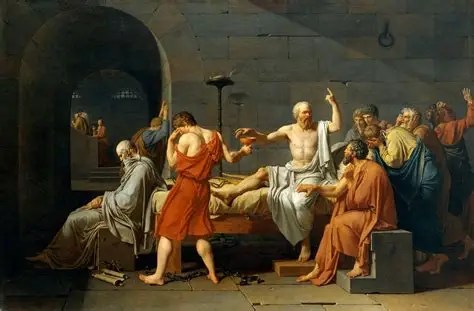
I think that the fundamental question of philosophy in the Greek tradition is concerning how to live a good life. Perfection of life has been a major concern throughout the history of western philosophy. It is said that Socrates dissatisfied is better than a pig satisfied. The question concerning ‘better life’ is found in the dialogues of Socrates. The major teaching of Socrates was that ‘an unexamined life is not worth living.’ He used to say that he guided the young men of Athens to live a good life. He used to instruct the aspiring young men to take care of themselves.
The question of good life resurfaces in the thoughts of Aristotle. His ethics is all about the description of good life. He discusses the idea of Phronesis (practical wisdom) which is different from logos (theoretical wisdom). Phronesis is the practical wisdom which enables us to do the right thing at the right time. His entire virtue ethics is rooted on the idea of Phronesis. With Aristotle, ethics becomes a key concern in philosophy. Ethics asks questions concerning the right action. This Aristotelian idea of practical wisdom appears in the philosophy of Martin Heidegger in the 20th century. His dasein analytic introduces the idea of authentic life which is governed by practical wisdom. For Heidegger, philosophy is to do the appropriate thing at the appropriate time in the appropriate way. Heidegger’s thought emphasizes the idea of a ‘well-disposed person’ and ‘poetic dwelling.’ Heidegger was much concerned about the impact of modern day technology on the lives of people. He found that technology enframes our perception of the world which alienates us from the world. He emphasized the Socratic and Kierkegaardian idea that we need to embrace the uncertainty lies at the bottom of existence.
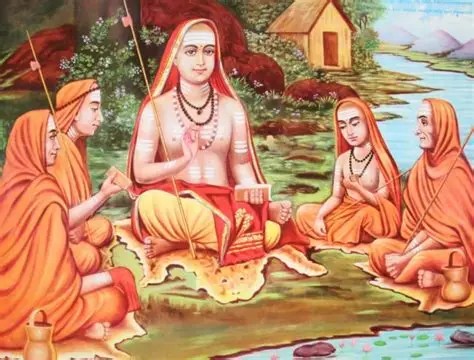
Indian philosophy also echoes the idea of the fundamental ‘nothingness’ lies at the bottom of existence. Advaita Vedanta of Sankara emphasizes the idea that the ultimate reality cannot be explained. Samkara explains the inexplicability of the ultimate reality (brahman) in his Vivekacudamani. He says that the highest knowledge is the knowing which enables us to know everything. The highest possible knowledge in the Indian tradition is the knowledge that the ultimate reality is not explainable and cannot be put in propositions. It means that the ultimate reality resists all our scientific and technological modes of knowing. Indian philosophy communicates the idea that the ultimate reality is an experience of nothing (no-thing). In this sense, the ultimate reality (brahman) is not a thing. It further asks us to embrace the inexplicability with grace. It echoes the Socratic idea of Aporia which means that we do not know the fundamental principles of the reality. This inexplicability is the key idea that Socrates communicated to his interlocutors. In short, it can be said that both the Indian and the Western traditions of thought inspires us to embrace the inexplicability and rupture at the bottom of reality and face the anxiety of existence in a positive way.
Shibin Joseph, IIIT Delhi


 KALA
KALA 
Leave a comment