What is philosophy? The very first image comes to us is the one who is lost in deep thought. It gives the idea that philosophy is an activity of logical argumentation. Analytic philosophy seems to dominate the academia in our times. The ancient Greek world had a different conception of philosophy. In this article, I intend to highlight two major approaches to thinking in the early Greek tradition.
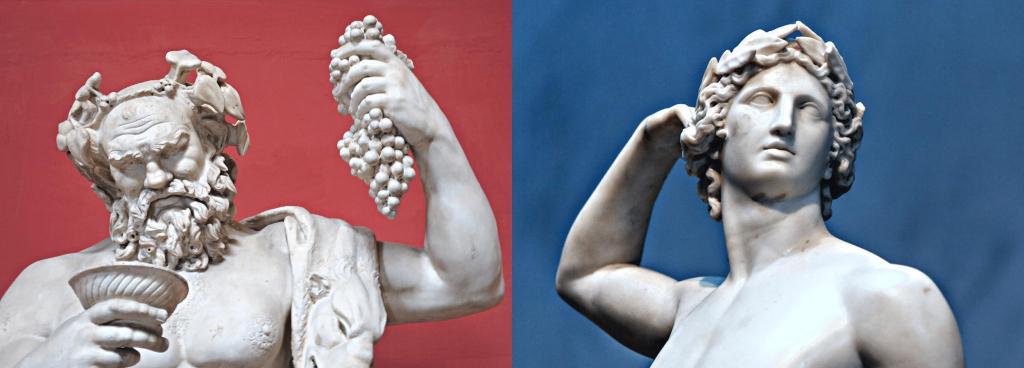
Mythos and Logos were the two ways of thinking in early Greek world. They complemented to each other. Logos refers to the rational way of thinking which highlights logic and propositions, while mythos refers to the realm of stories and symbols which convey values and meanings. There is a harmony between mythos and logos in the Greek tradition, and they represent the dual engines of the early Greek thought. They balanced the imaginative and the analytical in their thinking. This approach can be seen in the blend of the Apollonian and Dionysian in the Greek literature. Dionysus, the God of wine, symbolizes the disorder, intoxication, aporia, and music, while Apollo symbolizes the rational order and analytic thinking. Nietzsche commented that the harmonious balance of the Apollonian and the Dionysian was eventual lost in the Western philosophical tradition.
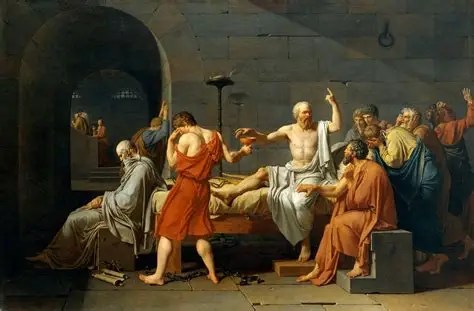
With Plato and Aristotle, the early Greek abandoned their mythical approach to the reality and began to embrace rational thought. This rational approach to reality had reached its peak during the times of Rene Descartes. My professor in JNU used to comment that Descartes literally killed aporia in philosophy. The Cartesian method of doing philosophy is analytic in its nature which rejects all aporia and emphasizes certainty. We find that the thought of Socrates is filled with aporia. Many Socratic Dialogues like Euthyphro, Symposium, and Republic, end in aporia. The dialogues just end without reaching any clear consensus. Socrates challenges the expert in different domains to give a clear definition of some concept belonging to their expertise. He drags them to the understanding that we do not have clarity concerning the foundations of our knowledge claims. It is assumed that Socrates was in aporia and he spread it among others. Socratic dialogues are also filled with numerous references to Greek mythological characters which shows that the harmonious blend of logos and mythos was there in his thought.
We find the aporia comes back to philosophy during the 20th century in the continental philosophical tradition. The phenomenological tradition of Husserl, re-invented aporia in philosophy. Myth gained more focus in the phenomenology of Paul Ricoeur. Ricoeur considers myth as a way of expression the enigma of human existence. I think that mythology is a way of exploring the complex and nuanced nature of reality.
Shibin Joseph, IIIT Delhi




 KALA
KALA 
Leave a comment