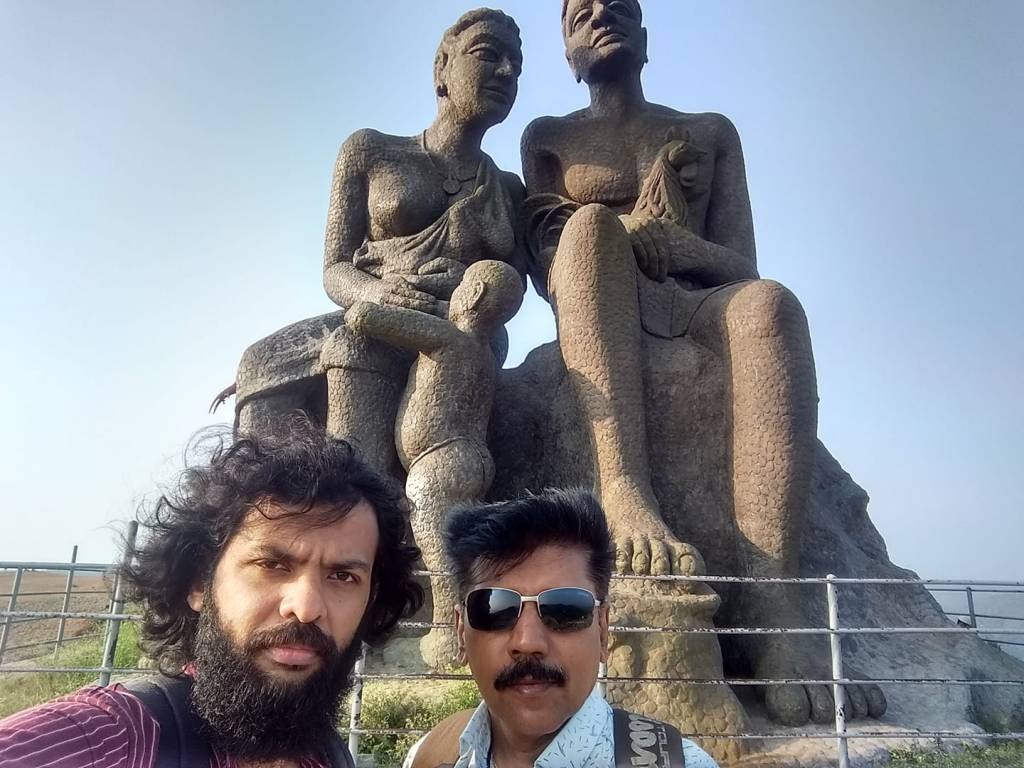
I visited Ramakkalmedu along with my friend in order to explore the mythological significance of these hills of wind in Idukki district of Kerala. As we got down at Ramakkalmedu, a man named Jabbar approached me. He took us to his home stay named “Marottical Home Stay.” Indeed, its a great place with amazing Kerala food. I still relish the Steam Cake with Kadala curry they served.
After a short break at home stay, we started our exploration of the hills of wind. Let’s start.
The emerald hills of Idukki, Kerala, hold secrets deeper than their verdant valleys. Among them, Ramakkalmedu stands tall, not just for its breathtaking panoramic views and invigorating winds, but for the mythological threads that are woven into its very fabric.

For those who venture beyond its scenic charm, Ramakkalmedu unveils a narrative steeped in Hindu epics, a testament to a bygone era where gods and mortals walked the same land.
The very name, “Ramakkalmedu,” echoes with legendary significance. It is believed to be the place where Lord Rama, during his epic search for his abducted wife Sita, set foot. “Rama’s foot imprint rock” (Rama-kal-medu) translates to “Rama’s stone land” or “Rama’s footprint rock,” and locals revere a specific rock formation on the hilltop as the very spot where the virtuous king rested his feet. Imagine the scene: Rama, the embodiment of righteousness, surveying the vast landscape in his quest, his presence imbuing this land with a sacred aura.
But the mythological connection doesn’t end with Rama. The imposing Kuravan and Kurathi statues that majestically overlook the plains narrate another captivating tale. These larger-than-life figures represent a tribal couple who, according to local folklore, helped Lord Rama identify Sita’s footprints on the rocks. Their keen eyes and unwavering loyalty played a crucial role in Rama’s search, and their towering forms serve as a constant reminder of their contribution to the epic saga. These statues aren’t just artistic marvels; they are a tribute to the indigenous wisdom and devotion that aided the divine.
The strong, constant winds that sweep across Ramakkalmedu are also intertwined with mythology. Legend has it that these are the breaths of Hanuman, the mighty monkey god and Rama’s devoted devotee. As Hanuman flew across the subcontinent in his tireless search for Sita, he is said to have paused here, his powerful exhalations creating the perpetual gusts that define the region’s climate. Standing on the hilltop, feeling the relentless wind against your face, it’s easy to imagine the powerful presence of Hanuman, forever guarding this sacred land.
Beyond these prominent legends, the hills and valleys surrounding Ramakkalmedu are likely to hold other local myths and stories, whispered down through generations. Each rock formation, each unique bend in the path, might be associated with minor deities or significant events from local folklore, further enriching the mythological tapestry of this region.
Visiting Ramakkalmedu is therefore more than just a visual treat; it’s an opportunity to walk in the footsteps of legends. As the wind whispers tales of Rama and Hanuman, and the Kuravan and Kurathi statues stand as silent sentinels, you can’t help but feel a connection to the epic narratives that have shaped India’s cultural landscape.
So, the next time you plan a trip to Kerala, make sure Ramakkalmedu is on your itinerary. Come not just for the breathtaking views, but to immerse yourself in the mythological significance that permeates this enchanting hill station. Listen to the whispers of the wind, gaze upon the ancient rocks, and let the legends of Rama and his devoted companions transport you to a time when gods walked among men, leaving their indelible mark on the land we explore today.
By Joseph Kala



 KALA
KALA 
Leave a comment